-
PerfectDraft Stella Unfiltered Lager
After the first keg of standard Stella I connected the unfiltered version. I expected much of the unfiltered Stella but compared to standard Stella I found little added taste. Not that it was bad, on the contrary but the standard Stella already had quite a lot of taste and the unfiltered one didn’t add much to that in my opinion. So looking at value for money I will pick the standard Stella and maybe order an unfiltered one for an occasion with guests coming over as it is less common. Bottom line for me is that it adds a bit…
-
Wagamama St Paul’s
On our first day in London we were looking for a place for a late lunch and ended up in Wagamama St Paul’s. We had heard about the chain but had never been to one. This is Japanese fast food with quality as can be expected from a fastfood restaurant. Although not bad the food lacked finesse and was heavy on dressing to add flavour. It wasn’t exactly cheap either so I would personally pass on a new visit unless I could find anything else more interesting in the neighbourhood. The place had a quite positive rating of 4.2 in…
-
London Marriott Maida Vale
We spent a long weekend in London and staid at the London Marriott Maida Vale. We found this hotel looking for reasonably prices options in London. It is a bit outside the center and less expensive. Also, we could get a family room with 2 double beds which also reduced the price compared to places that force you to book 2 standard rooms. The neighbourhood is not exactly nice but we were a few minutes away from a underground station and we needed to switch only once to another line to get into the city center; taking in total a…
-
American Prometheus. The Triumph and Tragedy of J. Robert Oppenheimer, Kai Bird, Martin Sherwin (ISBN 9780375726262, Vintage Books)
The pulitzer prize winning biography of Robert Oppenheimer. The one on which the Oppenheimer movie from 2023 is based. I read the book after seeing the movie. The main reason being I didn’t have the book yet and it took some time before it got delivered. Instead I read the biography by Pais first before watching the movie. I finally got the book not too long after watching the movie but as the urgency to read it soon was no longer there it got the usual treatment of incubating for a while in the pile of new books. Then, with…

-
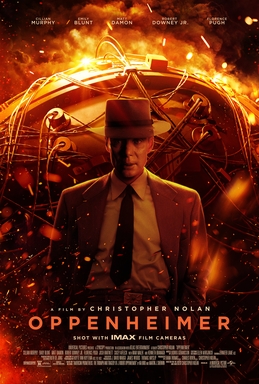
Oppenheimer
After having read the Oppenheimer biography from Abraham Pais I felt sufficiently prepared to go and watch the movie. I went to see it with my wife in a week that both kids were not at home. It was a bit of a last minute decision during an evening in the week. Arriving at the cinema it was immediately obvious we were not alone, almost no parking space and a short walk to the theatre while being already late. Luckily we had already booked our numbered seats and downloaded our tickets on our phone so we could go straight the…
-
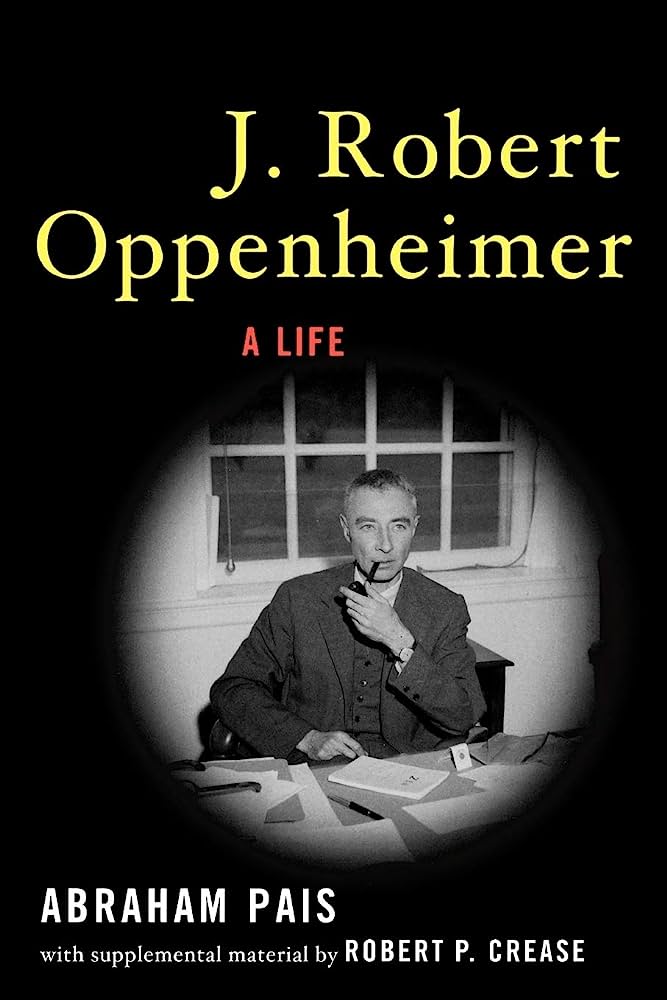
J. Robert Oppenheimer. A Life, Abraham Pais (ISBN 9780195327120, Oxford University Press)
With the Oppenheimer movie coming out I decided to read a biography first. I didn’t have the one from Kai Bird on which the movie is based (has been rectified in the mean time) but I did have 3 other books on Oppenheimer patiently lying in the library waiting to be read. After googling a bit I decided to go for the one from Abraham Pais first. Pais was a leading physicist in his day a and a member of the Princeton Institute of Advanced Study while Oppenheimer was its director so he had a lot of first hand knowledge…
-
A Good Pummeling
‘The wicked angel of empiricism continues to pummel me.‘― Johann Wolfgang von Goethe
-
PerfectDraft Pro
After some years of hesitating I finally bought my own PerfectDraft machine and a Pro one at that. Ever since my wife stopped drinking wine because the sulfites give her headaches I am mostly drinking beer. But there is never room in the fridge and one beer is too little while 2 are often too much. So I often throw away half of the second one. The continous stocking of new bottles and then bringing back the empty one is also a drag. For these reasons and more I was considering to buy a PerfectDraft. But they are not exactly…
-
Star Wars: Episode 3 – Revenge of the Sith
Episode 3 is the last part of the prequel. Here the premonitions that Anakin will fall under the spell of the emperor to be and turn to the dark side finally come true and Darth Vader is born. Driven by ambition and the fear for losing Padme after already having lost his mother Anakin is drawn into the nets of Palpatine who promises him knowledge to save Padme. Besides this psychological thriller story line there is the action packed story of the Jedi fighting the separatist rebellion and are almost all murdered when they are betrayed by their clone army…

-
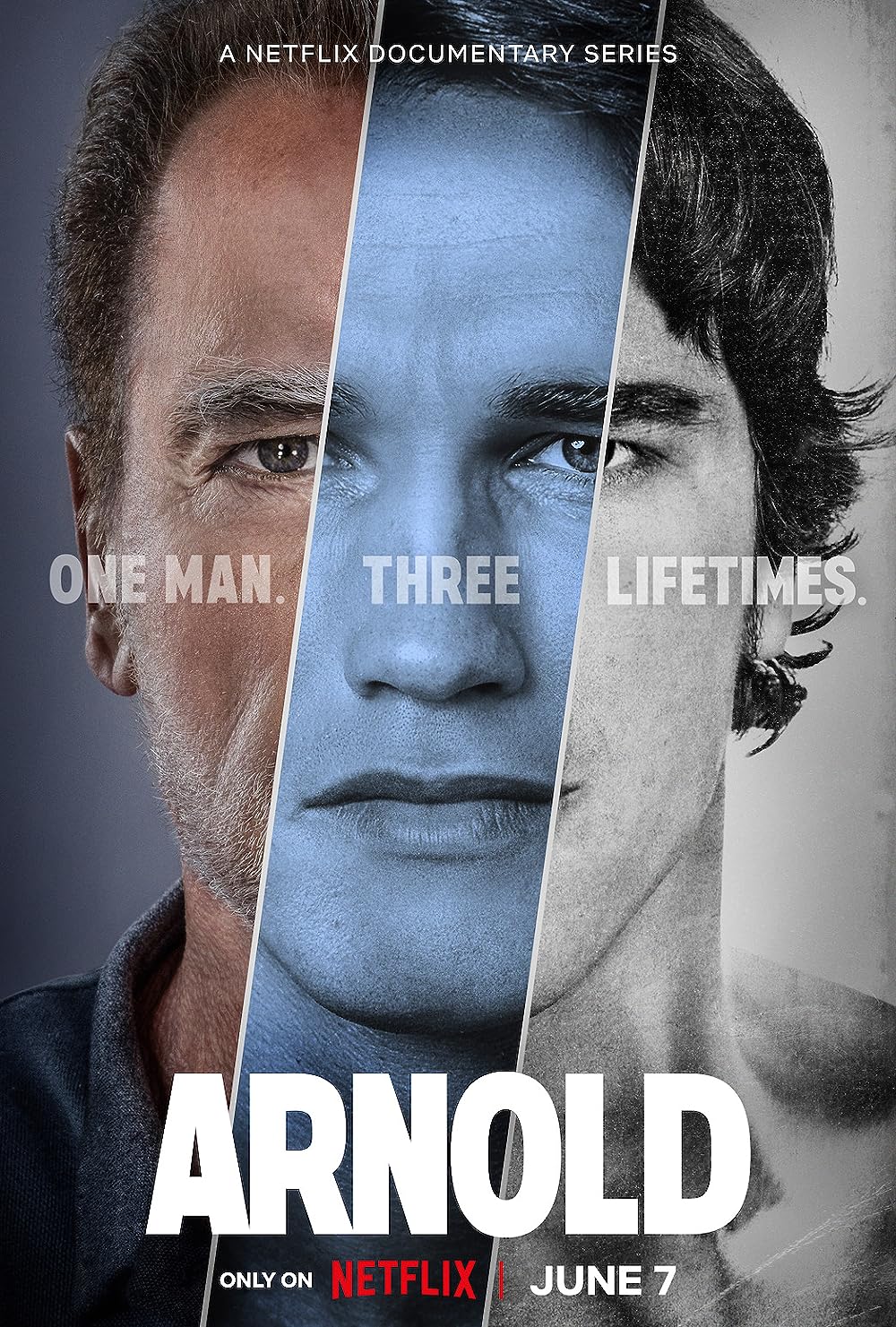
Arnold
Watched this 3 part documentary on Netflix. Each episode is roughly 1 hour long and covers a different period in Arnold Schwarzenegger’s life. Part 1 covers his youth and body building career. Part 2 is about his career as an actor and part 3 covers his venture into politics as governor of California. The series is nicely done, basically a long interview with Arnold and other people (e.g. James Cameron) together with a lot of historical footage. Quite incredible what he achieved in all 3 domains. Granted, he never was a great actor but his ambition was to become a…
-
Subscribe
Subscribed
Have a WordPress.com account? Log in now.

