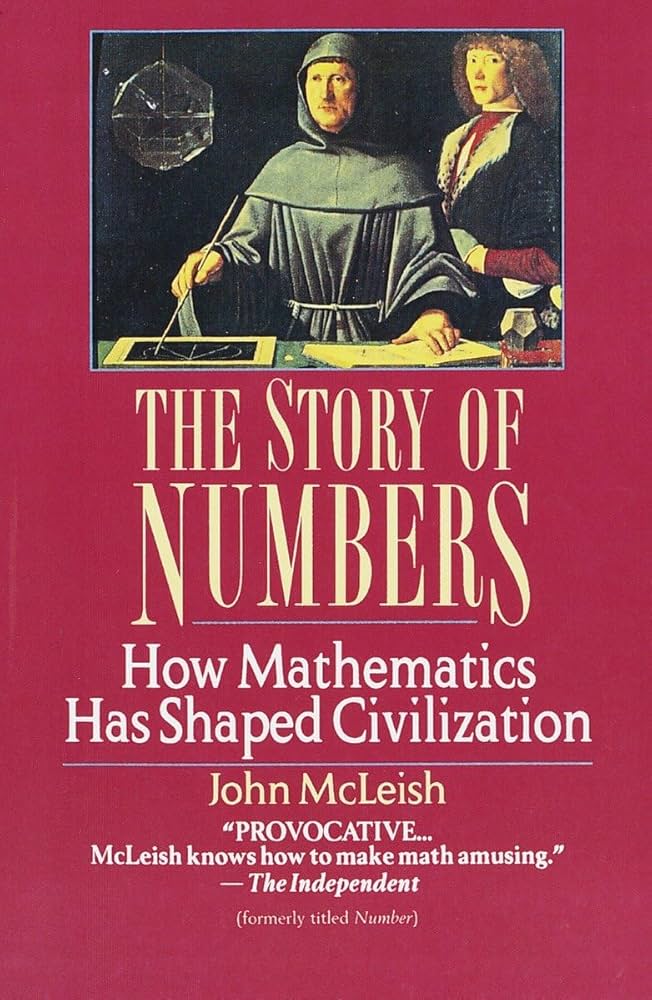
 The Story of Numbers explores the history of mathematics to trace the rise of various number systems in cultures from Mesopotamia to the modern Computer Era. It is not a traditional history of mathematics or a history of mathematicians. Instead it focuses on the different number systems and calculation methods that evolved in time in different cultures. It describes how the needs of these cultures influenced the development of numbers and early mathematics and how the mathematics in turn influenced the cultures. All civilisations had some counting methods but only cultures that needed elaborate calculations to predict the calender and astronomical phenomena developed number systems and notations and algorithms that facilitated these calculations. The book also explains how the Greeks held back the development in Europe for centuries because they distinguished between real mathematics as in Euclidian geometry and aritmetic which they considered an ‘unworthy’ activity to be conducted by slaves. I liked reading this book mainly because it takes this different vantage point. The first 10 chapters are each devoted to one ancient civilisation. Then follow a few chapters on developments in England and the book concludes with some chapters on calculators and the computer. The book was published roughly 30 years ago and it is striking to read the chapter on the electronic computer. Reading this chapter today almost feels like this is equally far back in time as Napier’s bones, sort of a ‘paper calculator’ invented by John Napier in in the sixteenth century.
The Story of Numbers, John McLeish (ISBN 978-0-449-90938-6, Fawcett Columbine)
 Response 418
Leave a comment