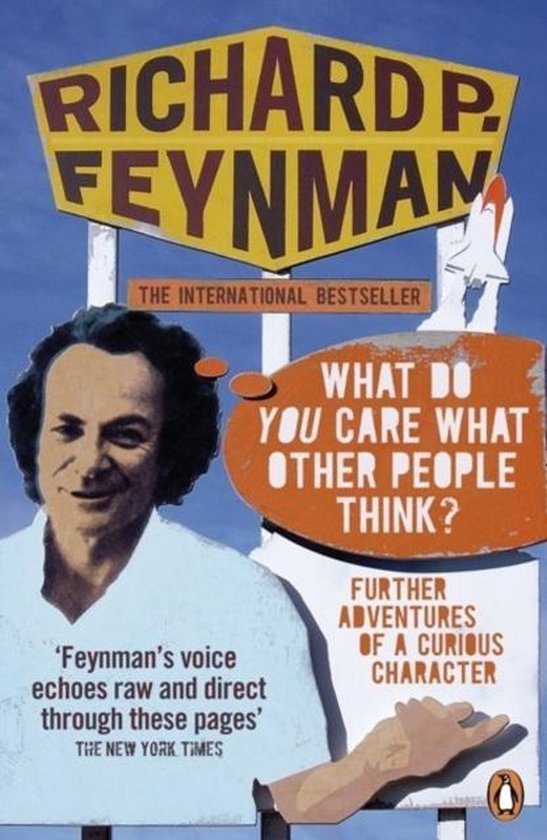
 This is the follow up of the bestselling Surely You’re Joking Mr. Feynman. It is quite a bit thinner, only 230 pages or so and of a different nature. Where Surely You’re Joking had a lot of relatively short funny stories with Feynman playing the ‘comedian’ this book is a lot more serious in tone. This has a lot to do with the stories that are bundled in this book. The first part is mainly focusing on his younger years, how he met Arline; how they got married and discovered she had tuberculosis on until her death. The second half of the book is one long story/chapter about Feynman and his time on the commission investigating the space shuttle Challenger accident. Summarising this book is more biographical and less entertaining. I had read the book before in Dutch and just decided to read it again after finishing Surely You’re Joking. It was worth reading again and although I remembered quite a bit of it the chapter covering his report on the Challenger accident that was added as an appendix was new to me (I guess I just forgot). I recently watched Star Trek 4 and that movie starts in opening titles with a tribute to the crew of the Challenger. So it was good to read up again not only on what happened but also on how certain parts of NASA got over confident in the safety of the space shuttle with catastrophic results in the end. Almost 20 years later space shuttle Columbia would have a fatal accident upon re entry which was the beginning of the end of the space shuttle program. Reading in the book about all the technology in the space shuttle like for example the very advanced engines it is somehow a shame that they don’t fly anymore. I find found them more inspiring to watch than a standard rocket. They had a futuristic appeal making you dream that the space age had truly arrived and soon space travel would be as normal as taking an airplane. The book illustrates that this was an illusion that even NASA desperately wanted to believe. At that time the space shuttle was technically too complicated and advanced to also be cheap and safe at the same time. Once this insight finally dawned the government and citizens decided, paraphrasing one of the final sentences from the book/chapter, ‘that the limited resources could be spent wiser‘.
What do you care what other people think, Richard Feynman (ISBN 978-0393355642, W. W. Norton & Company)
 Response 418
Leave a comment